
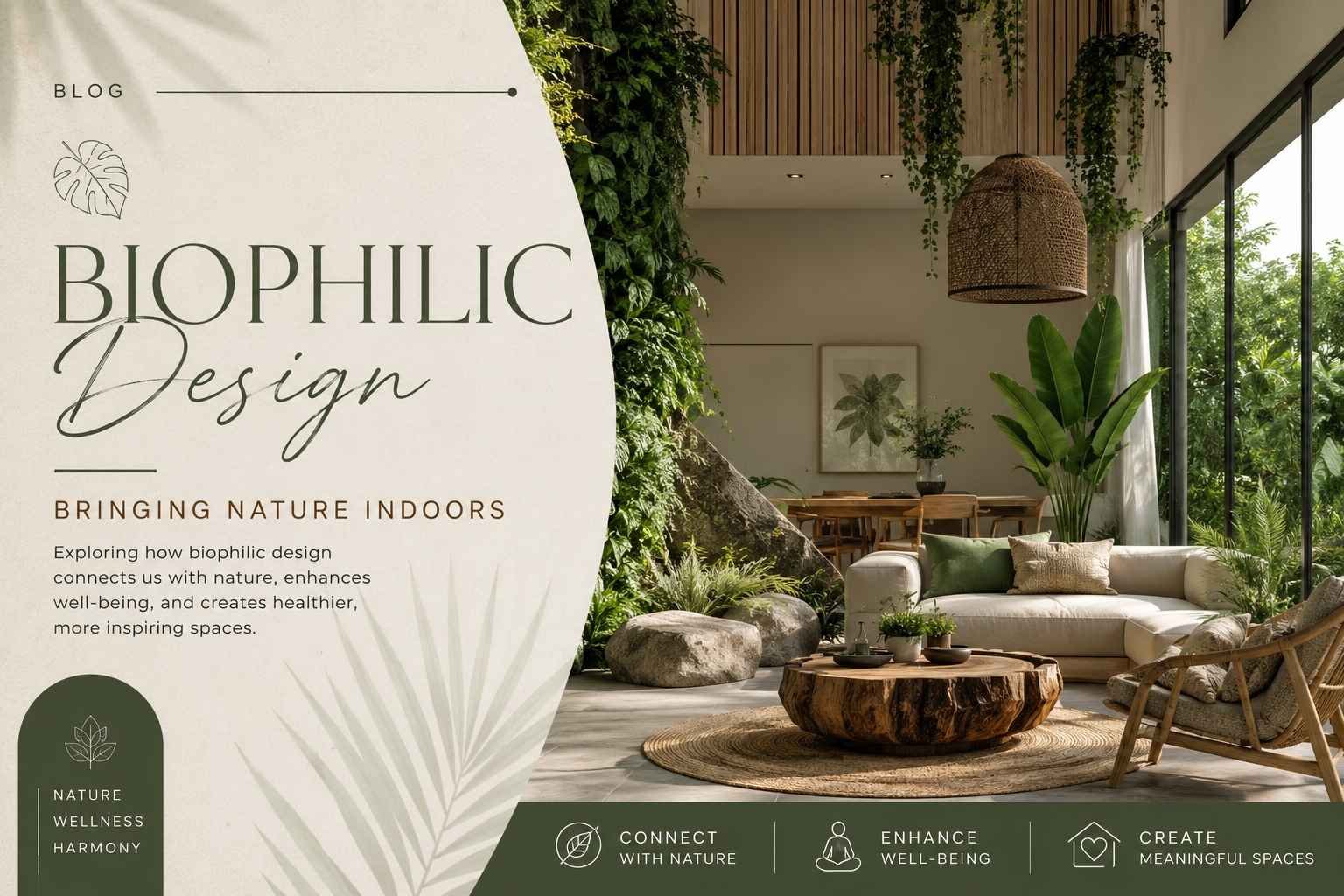
Imagine coming home after a hectic city commute to a living room bathed in warm sunlight and filled with lush green plants. The tension in your shoulders eases as you sink into the soft sofa, surrounded by natural textures. This isn’t just good interior decorating – it’s the power
of biophilic design. By intentionally bringing nature indoors, biophilic design taps into our innate love of the natural world, grounding us and boosting mood, health, and even productivity.
“The guiding principle [of biophilia] is quite simple: connect people inside with nature to promote their well-being and quality of life.”
We’ve long known that houses with garden views feel more relaxing, but biophilic design goes further – it weaves natural light, plants, water, and organic materials into architecture and interiors, so that every corner of a room feels alive and welcoming. In fact, research shows spaces with natural elements dramatically reduce stress, improve mood, and sharpen thinking. No wonder offices and homes that embrace these ideas leave people feeling refreshed, focused, and happier.
Biophilic design starts with biophilia – humans’ instinctive affinity for nature. When architects and designers translate this into built spaces, they create environments that mimic the outdoors. That means huge windows that let in sunlight and fresh air, walls of living plants, water features, and finishes like wood, stone, and woven textiles. Instead of cold concrete and fluorescent lights, you get warm textures, daylight, natural patterns, and the gentle sound of a tabletop fountain.
Studies confirm what our instincts tell us: even looking at nature calms us. A University of British Columbia study found that rooms with natural wood elements lowered stress more than rooms with potted plants. Another Cornell-led study discovered that office workers with windows reporting to the outside had 84% fewer headaches and eyestrain, leading to a 40% jump in productivity. In other words, when we see greenery and daylight, our minds relax and our bodies thank us – and we get more done in a better state of mind.
Have you ever wondered why spending time in nature instantly makes you feel calmer? The answer lies in the way our brains respond to natural environments. Humans have evolved alongside nature for thousands of years, so our minds instinctively react positively to sunlight, greenery, natural textures, and organic patterns.
Research in neuroscience suggests that exposure to natural elements can help reduce stress, improve mood, and support better cognitive performance. Simple features like wooden surfaces, leafy plants, or views of greenery create a sense of comfort that many modern interiors often lack. Materials such as wood and stone not only add visual warmth but also encourage a stronger connection to the natural world.
Natural daylight plays an equally important role. Bright, well-lit interiors help regulate our body’s internal clock, improve focus, and create healthier living and working environments. When combined with plants and organic materials, these elements create spaces that feel welcoming, balanced, and restorative.
Studies have also found that nature-inspired environments can benefit healthcare, education, and workplaces by supporting emotional well-being and improving the overall user experience.
Whether it’s a home, office, or commercial space, incorporating natural elements creates interiors that feel healthier and more enjoyable to spend time in.
Biophilic design offers much more than visual appeal. By integrating natural elements into interior spaces, it creates environments that positively influence both physical and mental well-being.
Natural light and greenery contribute to a more relaxing atmosphere, helping reduce everyday stress while promoting a greater sense of comfort. Many workplaces also report improved focus, creativity, and employee satisfaction when biophilic principles are incorporated into office design.
From an aesthetic perspective, natural materials such as wood, stone, bamboo, and indoor plants add warmth, texture, and timeless elegance. These elements create interiors that feel inviting and authentic while supporting sustainable design practices.
Businesses also benefit from biophilic interiors. Hotels, cafés, restaurants, and retail spaces often use greenery, daylight, and natural finishes to create memorable customer experiences.
Comfortable, visually appealing environments encourage visitors to stay longer, engage more with the space, and develop a stronger connection with the brand.
Ultimately, biophilic design combines beauty, functionality, and wellness, making it a valuable investment for both residential and commercial interiors.
Creating a biophilic interior doesn’t require a complete renovation. A few thoughtful design choices can dramatically improve the atmosphere of any space.
Start by maximizing natural light through large windows, skylights, or open layouts that allow sunlight to reach deeper into the interior. Add indoor plants to introduce greenery, improve visual appeal, and create a stronger connection with nature.
Choose natural materials such as wood, stone, bamboo, cork, or clay to bring warmth and texture into your design. Complement these materials with earth-inspired colors like soft greens, warm browns, and muted blues to create a calm, balanced environment.
Additional features such as water elements, natural ventilation, nature-inspired artwork, organic shapes, and layered textures further enhance the sensory experience. Together, these elements create interiors that not only look beautiful but also promote comfort, relaxation, and overall well-being.
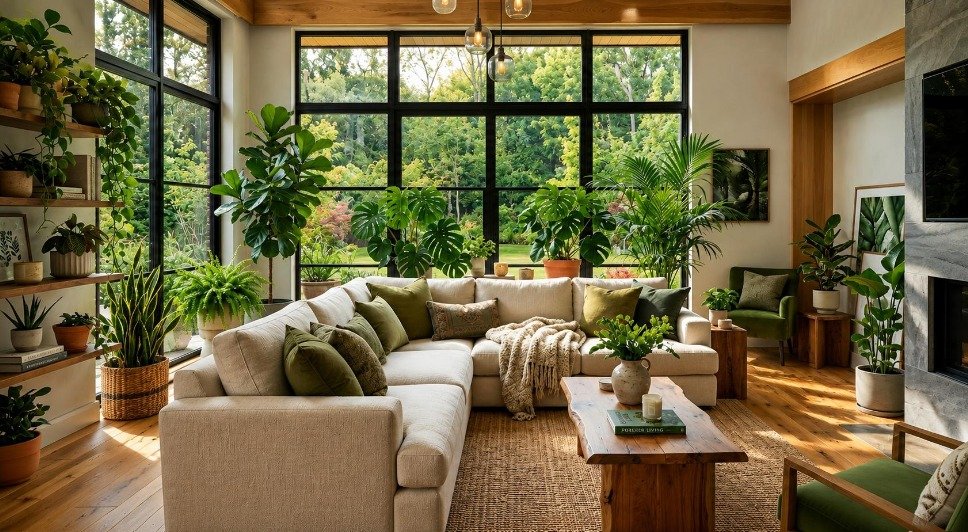
Across the world, architects and designers are crafting stunning biophilic spaces. For example, the Amazon Spheres in Seattle are giant domes filled with 40,000 plants from around the globe. Though extreme, they show how immersive greenery energizes work culture. Closer to home, many modern offices now feature green walls – vertical gardens that cleanse air and mesmerize the eye. Retailers like Starbucks coat their cafés with plants and natural textures, because customers stay longer and enjoy their coffee more in a nature-rich setting.
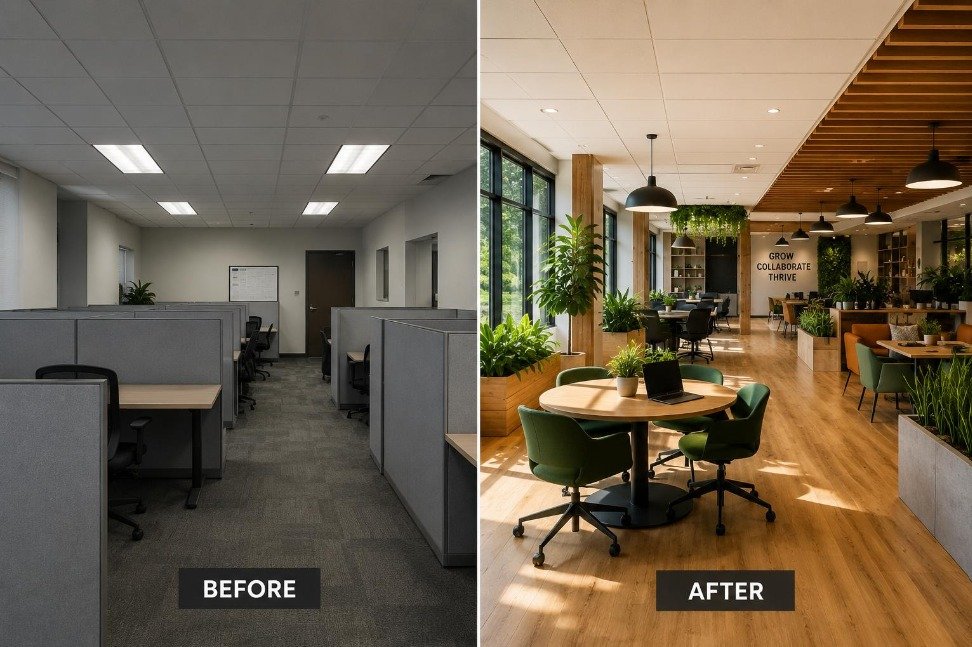
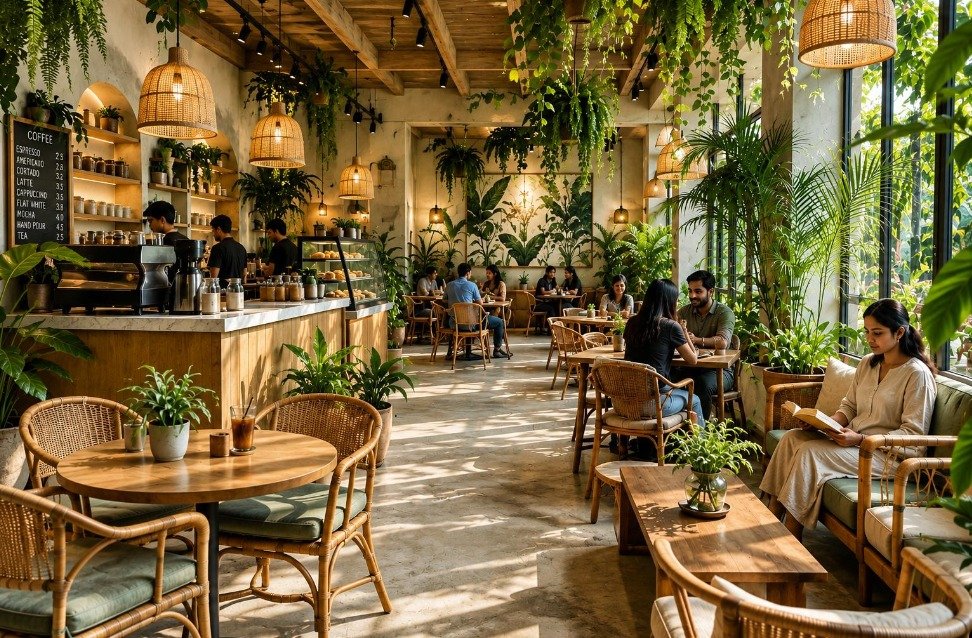
Even small spaces can feel lush. A downtown café interior with hanging plants, natural wood tables, and soft daylight (as pictured) subtly influences patrons. They sit longer, chat more, and feel calm. A “before-and-after” shot of an office renovation might show a gray, cubicle-dominated room transforming into an open hub with wooden floors, indoor trees, and bright windows. Workers report the post-renovation space is “like breathing new life” into the team.
Investing in biophilic interior design is not just feel-good – it’s smart business. Studies show
that well-designed environments pay off. For one, employees are sick less often and work more effectively. Some firms report energy savings too, by relying more on daylight and passive ventilation. Customers in shops and restaurants linger up to 30% longer in green, inviting atmospheres, often spending more. Real estate experts note that properties with gardens or nature-themed interiors can see 5–15% higher sale prices.
Moreover, in today’s wellness-focused market, clients and tenants often demand buildings certified for health. The WELL Building Standard, for instance, awards points for biophilic features, and companies use WELL or LEED Platinum as marketing. When patrons or potential buyers walk into a space and feel an immediate sense of calm and inspiration, it translates into brand value.
Actionable Takeaway: Adding a living wall or a few planters isn’t an expense—it’s an investment that pays you back in energy, satisfaction, and even the bottom line. High-end furniture brands and developers are already capitalizing on “quiet luxury” spaces filled with organic materials for this reason.
You don’t need a major renovation to enjoy the benefits of biophilic design. Simple changes can make your home or workplace feel healthier, brighter, and more connected to nature.
Start by adding indoor plants such as snake plants, pothos, or peace lilies. They introduce greenery, improve the atmosphere, and bring life to any room. Next, maximize natural light by keeping windows unobstructed and using light-colored curtains to allow sunlight to flow through the space.
Choose natural materials like wood, stone, bamboo, rattan, or linen for furniture and décor. These textures create warmth and add a timeless, organic feel. You can also introduce earth-inspired colors such as sage green, terracotta, beige, or warm brown to create a calm and welcoming environment.
Small additions like a tabletop fountain, nature-inspired artwork, or a cozy reading corner beside a window can further strengthen your connection with nature. As your project grows, consider larger features such as skylights, living walls, or indoor gardens. Consulting an experienced interior designer can help you incorporate these elements while maintaining both style and functionality.
Biophilic design is more than a passing trend—it’s a design philosophy that enhances both aesthetics and well-being. By bringing natural light, greenery, organic materials, and thoughtful layouts into our interiors, we create spaces that feel healthier, more relaxing, and more inspiring.
Whether you’re designing a home, office, café, or commercial space, biophilic principles can improve comfort, support productivity, and create memorable experiences for everyone who uses the space. Even small changes can have a lasting impact, proving that you don’t need an extensive renovation to reconnect with nature indoors.
As you plan your next interior project, think about how natural elements can become part of your design. A few carefully chosen additions can transform an ordinary room into a beautiful, functional environment that supports everyday well-being.
Biophilic design is an interior and architectural design approach that incorporates natural elements such as plants, daylight, water, and organic materials into built environments. Its purpose is to strengthen the connection between people and nature while improving health, comfort, and overall well-being.
Not necessarily. Many biophilic design ideas are budget-friendly. Adding indoor plants, using natural materials, increasing daylight, or introducing earthy colors are simple improvements that can make a noticeable difference without significant cost.
Yes. Biophilic design works in spaces of all sizes. Even a small apartment or office can benefit from indoor plants, natural light, and carefully selected materials that create a refreshing, nature-inspired atmosphere.
Absolutely. Nature-inspired workplaces, cafés, retail stores, and offices create more welcoming environments for employees and customers. These spaces often improve comfort, encourage longer visits, and help businesses build a positive brand image while supporting employee well-being.
Shipping & taxes calculated at checkout
Proceed to Checkout → View CartTell us about your project and we’ll create a personalized proposal